Toilet Repairs in Murrumba Downs
Running cisterns, weeping bases and weak flushes: these are the toilet repairs Murrumba Downs homes call us for, and a licensed plumber handles every one. Homes here average 2.7 people per household at the last census, so one bathroom often serves a full family and a faulty cistern gets noticed fast.
If we're late, $100 comes off your bill

- Licensed and InsuredEvery job done by a licensed plumber. QBCC No: 15024607
- Fixed Quote FirstFlat-rate pricing, agreed before any work starts
- Lifetime Labour WarrantyBacked by our Fix-It-or-It's-Free guarantee (T&Cs apply)
- $0 Call-Out FeesNo extra charge for nights, weekends or public holidays
For the wider fixture work, start at our Murrumba Downs plumbing page, or read on for the parts that fail, the Queensland rules and what drives the price.
The Three Parts That Usually Fail
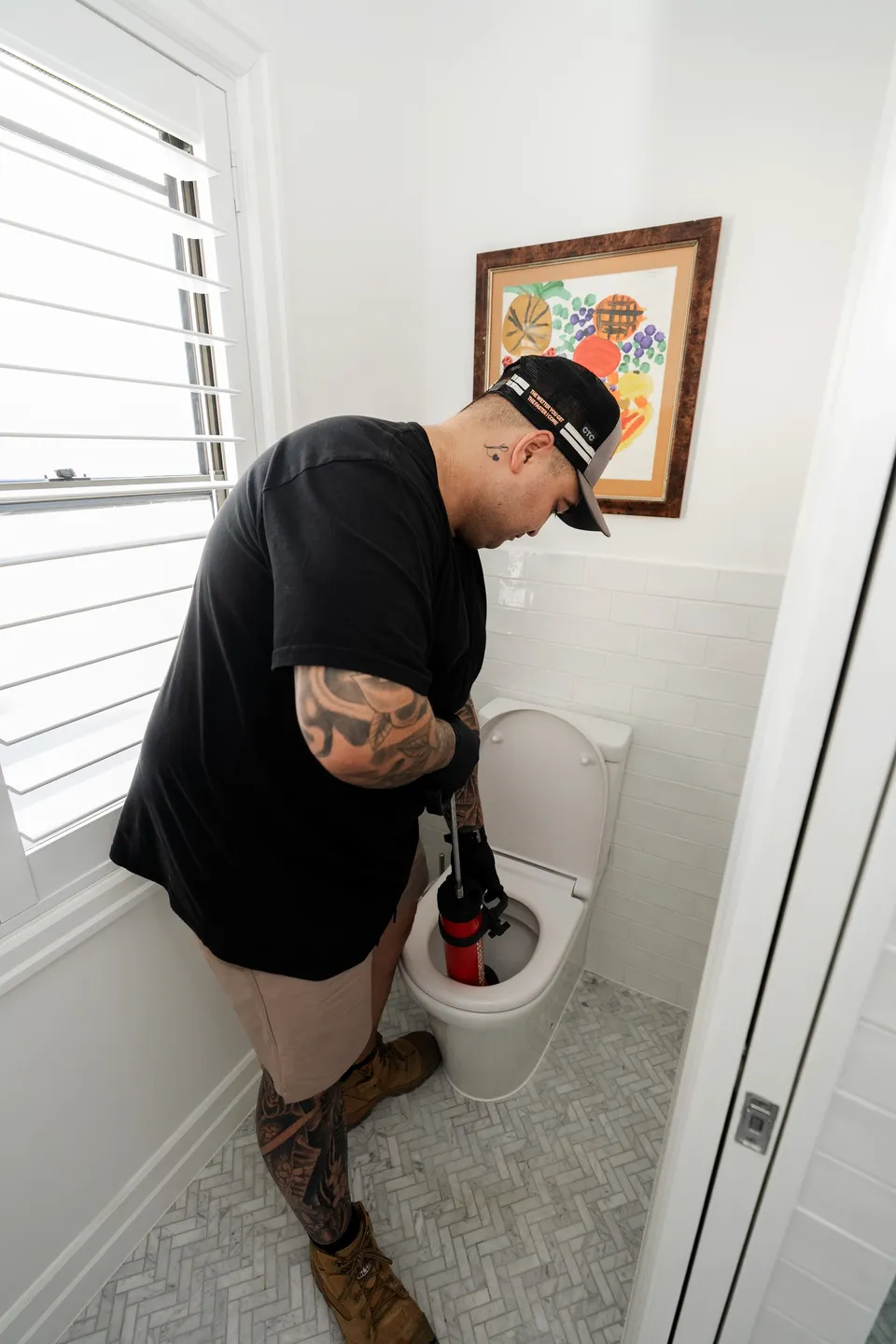
Three parts cause nearly every cistern fault: the inlet valve behind slow or endless filling, the outlet valve behind a toilet that runs on, and the seals behind the leaks.
The inlet valve
After a flush, the inlet valve fills the cistern again and closes once the float hits its set level. When the valve wears or blocks, the cistern fills sluggishly or keeps running.
The outlet valve
The outlet valve holds the water in the cistern between flushes. Once its washer wears, water slips past into the pan and the inlet valve tops the level back up, so the toilet never goes quiet.
The seals
Rubber seals join the cistern to the pan and the pan to the floor drain. Age hardens them, and each one shows up as a different leak.
A weak or half-hearted flush usually comes from a low water level in the cistern, scale blocking the jets under the rim, or a sticking button. We cover the full diagnosis on our page about why your toilet keeps running.
Who May Repair a Toilet in Queensland
Queensland's regulator, the QBCC, treats three cistern parts as unregulated work: a drop valve washer, a float valve washer and a suction cup rubber. Anyone with the appropriate knowledge and skill may swap those, though the finished job still has to meet the same standards.
Everything else on a toilet is minor work: a QBCC licensee does the job, needing neither a permit nor a Form 4. Seals, pan connectors, buttons and cistern replacements all sit on the licensed side of that line.
Renters get extra protection. A toilet that is blocked or broken sits on Queensland's emergency repairs list for rentals, and the owner or manager carries the duty of keeping the premises in good repair. Report the fault as soon as you notice it.
Damp Floor Around a Toilet
A toilet leak shows in three places: the cistern, the base or the supply connection, and each points at a different part.
Water at the base
usually traces to the pan connector, the rubber that seals the pan into the floor drain, or to a cracked pan.
Water between cistern and pan
means the seal joining the two has failed.
Water at the supply end
points to the stop tap, sometimes called a mini stop, or the braided hose supplying it.
A sewer smell is its own clue. Everything flushed here ends up at Unitywater's wastewater treatment plant in the suburb itself. Perished seals at the pan-to-drain joint are the gap that lets sewer gas come back the other way.
One quick check settles a silent leak: drip some food colouring into the cistern, leave it unflushed, and colour in the bowl means water is escaping. Flushing afterwards clears it, because the colouring does not stain ceramic.
For drips at the fixtures themselves rather than under them, our tap repairs page covers washers, cartridges and mixers.

When a Cracked Toilet Is Past Repair
The price turns on which part failed, whether the china has cracked, how easily the cistern and stop tap can be reached, and how many parts are replaced. Once the plumber has inspected the job, you get a fixed quote before any work starts.
Cracked porcelain is the line where repair gives way to replacement. Worn valves and seals are swappable while the body is sound, but a crack in the cistern or pan means that part comes out.
Repeated repairs count too. A toilet on its third fix in a year can cost less over time to replace than to keep patching, and we judge that job by job. Building here stretches from the 1960s through to the newest estates, so plenty of cisterns around streets like Castle Hill Drive have been quietly filling and flushing for decades.
Any replacement cistern or pan needs WaterMark certification plus WELS registration before a licensed plumber can legally install it. WELS stands for Water Efficiency Labelling and Standards, the scheme that rates how much water a fixture uses. Our toilet installation page walks through that side.
For the full range of fixture work, see our tap and toilet page.
How a Toilet Repair Visit Runs
- 1

Call or message us
Ring (07) 3524 7163 or use the form and describe what's going on in Murrumba Downs. A few details up front mean the right gear comes on the first trip.
- 2

We test the cistern and its parts
We lift the lid, run a fill and a flush, and check the inlet and outlet valves, the seals, the button and the stop tap. The faulty part usually shows itself within a minute or two.
- 3
Fixed quote, then the work
We give you a fixed quote before any work starts. It's flat-rate pricing with no hidden fees, and we only start once you approve it.
- 4

Settle up your way
Card and EFTPOS payment on site when the job's finished, or Fix now, pay later if that suits you better.
Plumbing job in Murrumba Downs?
$0 call-out fees, available 24/7, and same-day where we can.
Toilet Repair Questions From Murrumba Downs
Call (07) 3524 7163What are the usual cistern faults in a Murrumba Downs toilet?
Three parts cover most cistern faults: the inlet valve that fills the cistern, the outlet valve holding the water, and the seals. A worn inlet valve means slow or constant filling, a worn outlet valve makes the toilet run, and tired seals leak.
Why is there water around the base of my toilet in Murrumba Downs?
Water at the base usually traces to the pan connector, the rubber that seals the pan into the floor drain, a leaking supply connection or a cracked pan. Water between the cistern and the pan points at the seal joining the two.
Why does my toilet smell like sewage?
Perished or shifted rubber seals at the joint between pan and drain are the usual cause. A plumber checks those seals and the pan connector, because that joint is the only thing keeping sewer gas out of the room.
What makes a toilet in Murrumba Downs flush weakly?
Three things sit behind a weak flush: a cistern level set too low, scale in the rim jets, or a button that sticks. Each has its own fix, and the quote covers it once the cause is clear.
Can I fix a leaking toilet myself in Queensland?
Yes, for three cistern rubbers only: the washer on the drop valve, the washer on the float valve, and the suction cup. The QBCC classes those as unregulated work, though the result must still comply. Everything else needs a licensed plumber.

Call Us About Your ToiletWe'll call you back.
Book on (07) 3524 7163 for plumbing anywhere in Murrumba Downs. We're available 24/7, there's no extra charge for nights, weekends or public holidays, and every job comes with $0 call-out fees.
To claim your $0 call-out fee, call (07) 3524 7163 today.